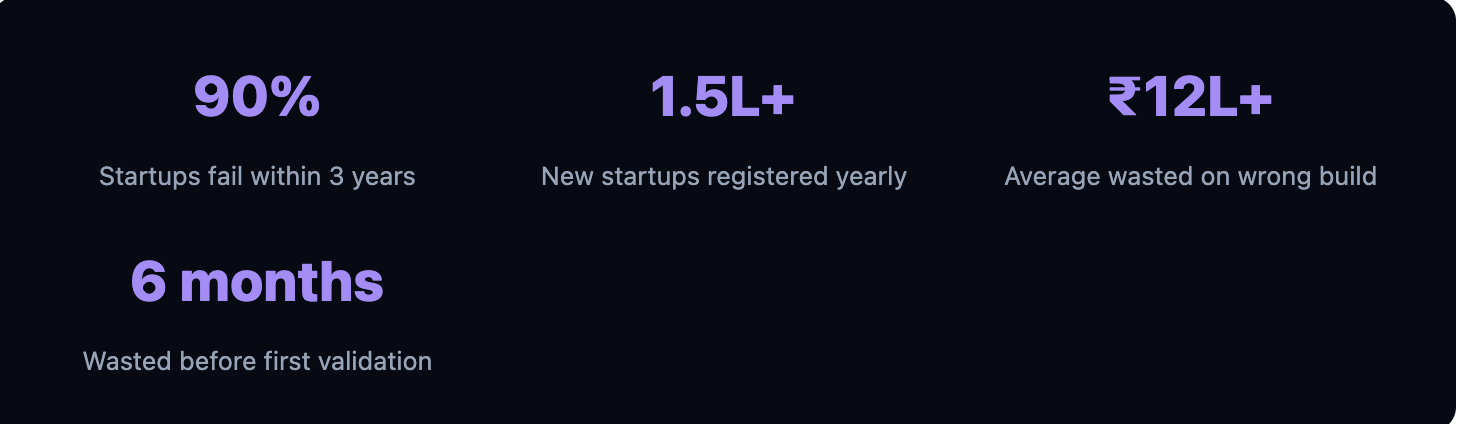
90% of Indian startups fail — not because they had bad ideas, but because they followed bad frameworks. Here's what the 10% who succeed actually do differently.
8-Step Startup Framework for Indian Founders in 2026 — Before You Spend a Rupee
You spent 9 months building your startup. You hired a developer, paid a designer, and pitched the idea to your family. You launched. And then… nothing. A handful of users, zero paying customers, and a ₹12 lakh bill that slowly empties your savings account.
This is not a story about one unlucky founder. This is the story of most Indian startups. India registers over 1.5 lakh new startups every year, yet 9 out of 10 shut down before their third birthday. The reason is rarely the market — India has 1.4 billion people and one of the fastest-growing digital economies on the planet.
The reason is the framework — or the complete lack of one.
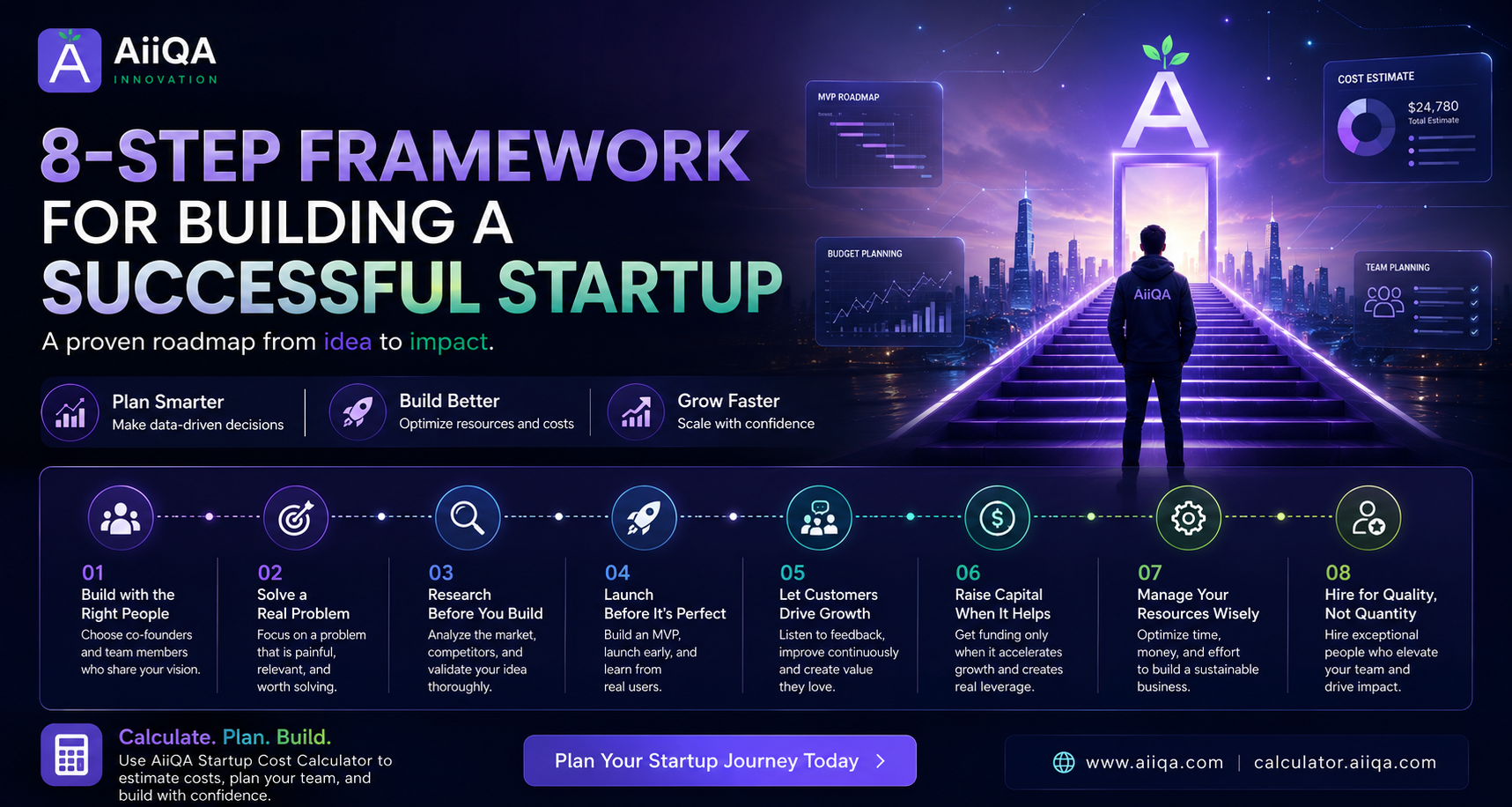
After working with Indian founders at AiiQA, we've seen a clear pattern: founders who follow a structured, repeatable framework dramatically outperform those who wing it. Not because they're smarter. Because they stop guessing and start validating.
This is that framework. 8 steps. Proven. And designed specifically for the non-technical Indian founder who wants to build something real in 2026.
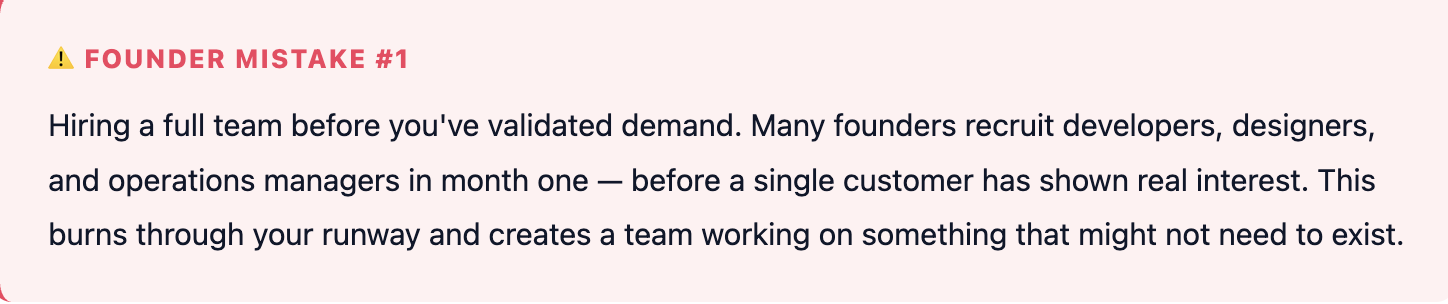
STEP 1:- Build With the Right People — Team First, Always
Every startup begins as an idea. But what actually determines whether that idea becomes a business or a cautionary tale on Reddit is the people you bring alongside you.
Markets change. Products pivot. Funding dries up. The team is the one constant that decides whether your startup survives all of it.
Most founders make the mistake of choosing co-founders purely on technical skills — "he can code, she knows marketing, let's go." But skill-matching is only the surface. What actually breaks startup teams apart are invisible fractures: different risk appetites, misaligned commitment levels, and unspoken assumptions about who "owns" decisions.
What the best startup teams share:
- A shared vision of what "success" actually looks like
- Complementary strengths — not a team of five marketers or five developers
- Brutal honesty with each other — ego-free feedback culture
- Defined roles and accountability from Day 1
- Long-term commitment — startup loyalty tested in the first hard quarter
The golden rule? A great team can rescue an average idea. An average team can destroy a great one.
💡 AiiQA Helps With This
Not sure which roles you actually need at your stage? AiiQA's free Startup Cost Calculator helps you map exact team requirements — CTO, full-stack developer, UI/UX designer, product manager — to your actual build scope. No guessing, no over-hiring.
STEP 2:- Solve a Real Problem (Not the One You Assume Exists)
Here's a founder truth nobody tells you loudly enough: your customers don't care about your product — they care about their problem.
People don't download project management apps because they love software. They download them because their to-do list is buried across four WhatsApp groups, and their boss is asking for a weekly status update they don't have. They don't buy fitness apps because apps are cool — they buy them because their doctor told them to lose 8 kilos by January.
The sharper the pain, the stronger the business. Full stop.
Ask yourself these questions — honestly:
- Does this problem actually exist, or did I invent it?
- How often does the person experience it? Daily? Once a year?
- On a scale of 1–10, how painful is it? (Below 7? Think twice.)
- Is the person already paying to solve it — with time, money, or workarounds?
- Who exactly is experiencing it? Be specific: "35-year-old Tier 2 city business owner" beats "businesses."
"Before I built my product, I spent 3 weeks calling 40 potential customers. Half of them changed my product entirely. The other half saved me from building something nobody wanted." — Common pattern in successful Indian startups"
Talk to potential customers before you touch Figma or write a single line of code. Conduct 20 conversations. Observe real behaviour. Look for the workaround — because wherever someone has built a jugaad to solve a problem, there's a startup opportunity hiding in plain sight.
📌 Quick Validation Test
Ask your target customer: "What do you currently do to solve [this problem]?" If the answer is "nothing" — reconsider. If the answer is a long, complicated, expensive workaround — you've found your market.
STEP 3:- Research Before You Build — Your Shortcut to Winning
Founders love to build. Research feels like a delay. But here's the uncomfortable math: one week of deep research can save you six months of wrong development. That's not delay — that's leverage.
The Indian startup graveyard is full of products that failed not because they were poorly built, but because founders never looked at what competitors were already doing — and more importantly, what customers were already complaining about.
The Competitive Gap Framework — Where Opportunities Hide:
- Strengths: What is your competitor doing that users love? (Don't try to outdo this from scratch.)
- Weaknesses: Where do 1-star reviews live? What complaints appear repeatedly on Reddit, Twitter, or App Store reviews?
- Gaps: What feature do 50+ users request that nobody has built yet?
- Market movement: Is the space growing or shrinking? What do search trends over 24 months tell you?
Great startups don't reinvent the wheel. They find the one thing the wheel is doing badly — and fix exactly that.
🚫 Skip Research = Skip Growth
The most common research mistake: Googling competitors for 20 minutes and declaring "there's no competition." No competition usually means no validated market — not a gap you can exploit.
STEP 4:- Launch Before It's Perfect — The MVP Mindset
Perfectionism is not a virtue in startups. It is a slow death.
Every month you delay launching is a month your competitor collects real customer feedback, improves their product, and owns the mindshare you were planning to capture.
The founders who win in 2026 are not the ones with the most polished product. They are the ones who launched first, learned the fastest, and iterated the hardest.
An MVP — Minimum Viable Product — is not a half-baked product. It's a focused product. It does one thing, for one customer, exceptionally well. Nothing more. Every extra feature you add before launch is a bet with your runway — and the odds are not in your favor.
The MVP Principle:
- What is the single most painful problem I'm solving?
- What is the minimum I need to build to solve ONLY that problem?
- Can I get 10 people to pay for it — even in its current form?

💡 Know Your MVP Cost Before You Build
Not sure how much your MVP will cost in India in 2026? Use AiiQA's Startup Cost Calculator to get an instant estimate of development budget, team size, and timeline — tailored to your product type and stage.
STEP 5:- Let Customers Drive Your Growth
After launch, the most dangerous thing you can do is trust your own assumptions more than your customers' behavior. Your roadmap should be written by your users — not by your whiteboard sessions.
The best startups operate on a simple feedback loop: ship → measure → learn → ship again. Every iteration makes the product stickier, the retention better, and the word-of-mouth stronger.
What to track relentlessly in your first 90 days:
- Why are users signing up? (What triggered them?)
- Where are they dropping off in the product? (Session recordings tell this story clearly.)
- Why are churning users leaving? (Exit surveys — even a 2-question Google Form works.)
- What feature do paying users say they can't live without?
- Who are your top 3 happiest customers? Can they refer 2 more?
The strongest marketing strategy for an early-stage startup is not ads. It is a product that people genuinely love — and talk about unprompted.
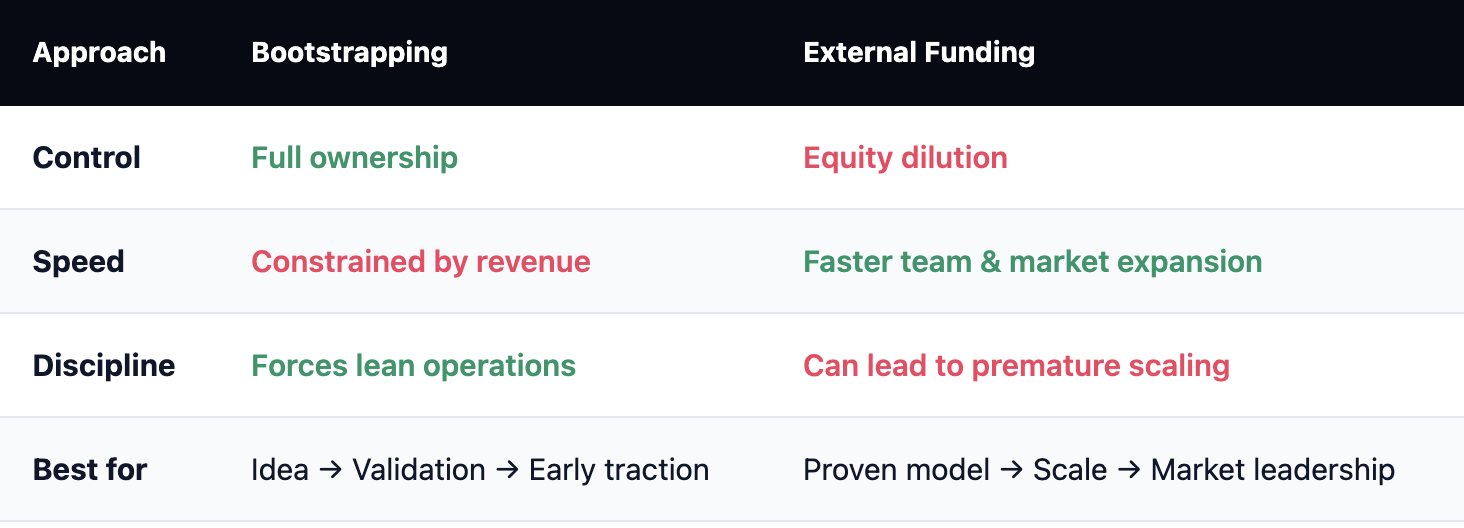
STEP 6:- Raise Capital When It Actually Helps
Funding is the most misunderstood concept in the startup world. Too many Indian founders treat it as the goal. Funding is a tool. It accelerates what's already working. It does not fix what's broken.
If your product has no traction, no retention, and no paying customers, raising a seed round will not save you. It will just give you a larger budget to make the same mistakes faster.
Before you pitch a single investor, make sure:
- You have real paying customers — not just signups, not just "interested" friends
- You understand why they chose you over alternatives
- Your month-on-month retention is improving, not declining
- You can articulate exactly what you'll do with the funds — and why that accelerates growth
- You're fundraising to scale, not to survive
- You've registered a Private Limited Company — investors put money into a legal entity, not a pitch deck
STEP 7:- Manage Resources Like Every Rupee Counts
These are industry averages. Want your idea's actual cost estimate? Get your free personalized estimate →
In a startup, resources are always limited. The founders who survive and scale are not the ones who raise the most money — they are the ones who stretch each rupee the farthest.
Your four most critical resources are Time, Money, Talent, and Focus. All four are finite. And all four compounds — spend them wisely, and the returns are exponential; waste them on the wrong priorities, and you're out of runway before your idea gets a real chance.
Resource decision filter — ask this before every spend:
- Will this expense directly create revenue or validated learning?
- Can this be automated instead of being hired for?
- Is this the highest-leverage use of this week's focus?
- Are we solving a problem our customers actually have — or one we assume they'll have?
The fastest-growing Indian startups in 2026 are not the best-funded ones. They are the ones that operate lean, automate early, and say "no" ruthlessly to anything that doesn't move the core metric.
💡 Plan Your Budget Before You Burn It
AiiQA's Startup Cost Calculator gives you a complete cost breakdown — development, team, tools, and timeline — before you commit to a single expense. Plan your startup budget free →
STEP 8:- Hire for Quality, Not Headcount
Headcount is not progress. Payroll is not traction. A startup team of 4 exceptional people consistently outperforms a team of 15 average ones — and at a fraction of the burn rate.
Poor hiring is one of the most expensive mistakes an early-stage founder can make. It creates communication overhead, slows decision-making, and drains morale when the wrong person occupies a seat where a great person could have multiplied the team.
What to actually look for in early hires:
- Ownership mindset: Do they solve problems or escalate them?
- Learning speed: Can they pick up new skills in weeks, not months?
- Adaptability: Can they handle the chaos of a pivot without breaking down?
- Accountability: Do they own outcomes — or just tasks?
- Mission alignment: Are they here for the journey — or just a job?
Skills can be taught. Mindset takes years to change. Hire the mindset — train the skill. And when in doubt, don't hire until you're certain the seat needs to exist.
📌 The Hiring Test
Ask every candidate: "Tell me about a time you had to figure something out completely on your own with no instructions." Great startup hires have a clear, confident answer. Average ones pause and describe a team exercise.
You know what an MVP costs.
Now find out if yours is worth building.
Get your free viability score, top 5 risks, and honest verdict — in 3 minutes.
₹159 for full report · 100+ ideas validated · No credit card for free score

Written by